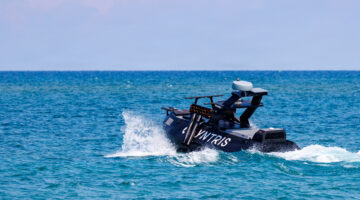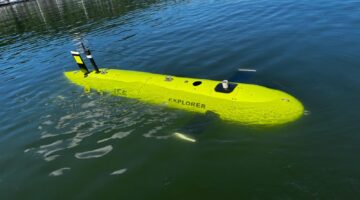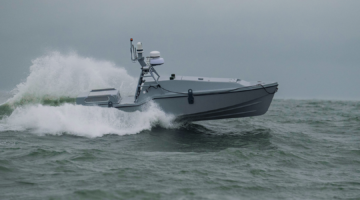
No longer ‘experimental’: Navy to deploy drone boats this year, official says
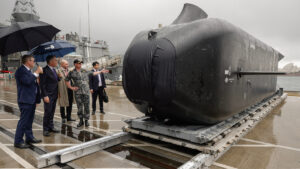
A Navy official said he expects by 2045 for nearly half of all naval surface vessels to be unmanned.
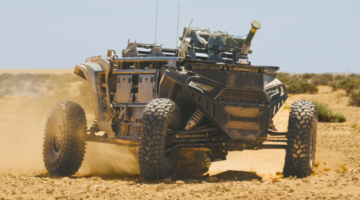
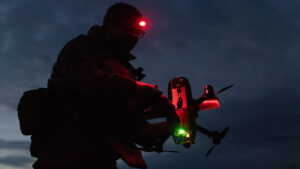
Instead of needing a specially trained human to remote pilot each drone or robot-boat, the Pentagon wants any servicemember to be able to give orders in plain English.
The Army secretary said the “end state” of such arrangements would make the US and its allies "stronger" in a future conflict where they would have to fight together.
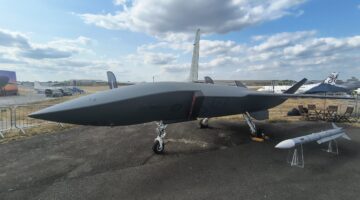
Northrop Grumman will serve as the prime contractor and integrate mission systems on Kratos’s XQ-58 Valkyrie for the Marine Corps’s MUX TACAIR Collaborative Combat Aircraft program.
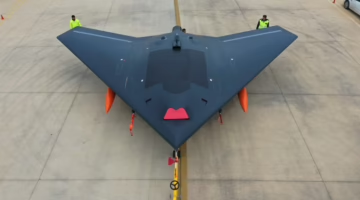
Sometime in 2026, the Air Force will make a decision about what designs to produce for the first round of its drone wingmen program. The service is also expected to home in on what it wants next.
From the skies over Ukraine, to Chinese cyber attacks, to bureaucratic battlefields inside the Pentagon, artificial intelligence has grown from an experiment or niche product to an increasingly routine tool of military organizations.
A new big boss? A new big ship? 2025 held a lot of change for the sea services with even more foreshadowed coming in 2026 and beyond.
CEO Hamad Al Marar mused that EDGE could make an appearance at a future Association of the US Army exposition.
The designs selected for the next group of Collaborative Combat Aircraft represent a “broad spectrum” of concepts, which will be narrowed down at a later date for prototyping, an Air Force spokesperson told Breaking Defense.
It's been a whirlwind of a year — and the defense establishment has plenty of thoughts on how it's unfolded and what might come next.
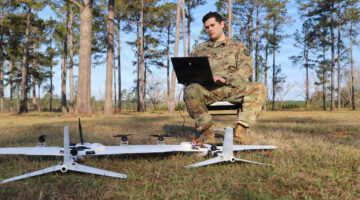
Service leaders are looking to find industry solutions for short/vertical takeoff and landing (S/VOTL) drones, ones that don’t require a runway, in the Group 4 or above category.
Indo-Pacific allies see unmanned systems, shared production, and interoperability as essential to offset China’s scale.
“My interpretation of that law is that we won't let a service procure something that doesn't perform and if they want to, JIATF-401 gets to say no,” said Col. Jonathan Beha, chief of requirements for the Joint Inter-Agency Task Force.
In the debate of AI versus human pilots, ULA's Tory Bruno considers a compromise where AI supports warfighters rather than replace them.